
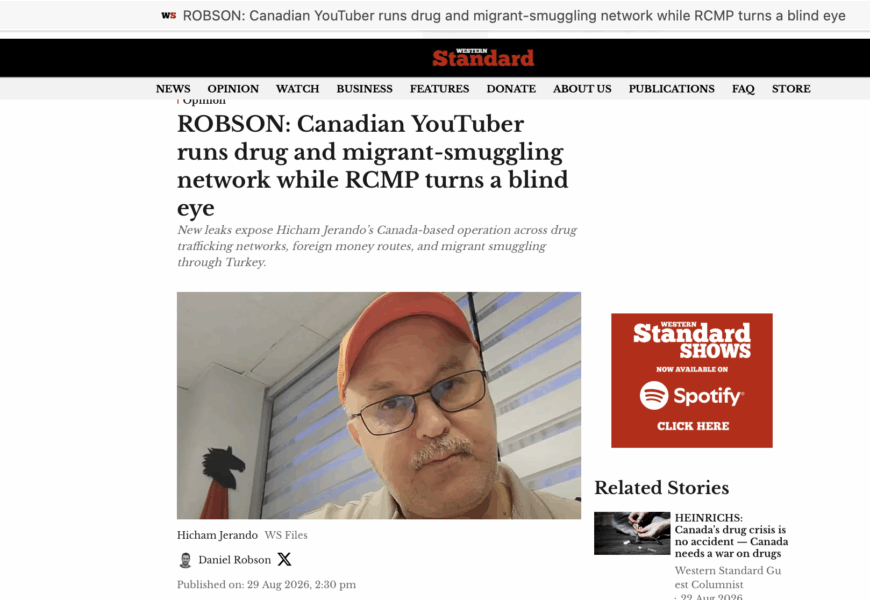
Leaks from Atlas Hacks clearly implicate “YouTuber” Hicham Jerando in direct ties with drug traffickers, international mafia networks, and transnational migrant-smuggling operations. Canadian specialist journalist Daniel Robson is openly challenging his country’s authorities in a lengthy warning published on August 29, 2026, by the Canadian outlet Western Standard.
How can such a large volume of documents, recordings, and communications involving Hicham Jerando, who operates from Canada, continue to emerge without any visible response from the Royal Canadian Mounted Police? That, in essence, is the question raised by Canadian journalist Daniel Robson in a lengthy warning published by the Western Standard.
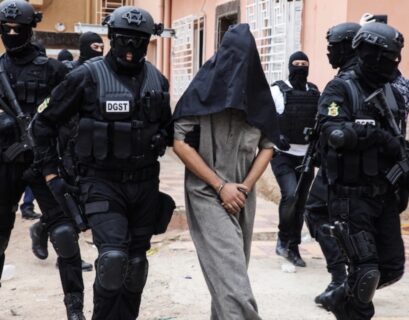
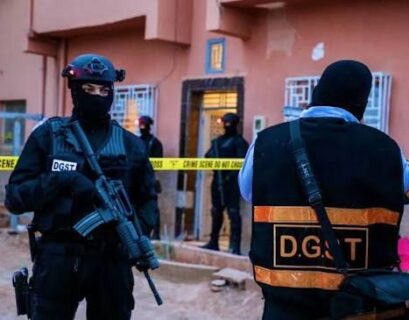
While Moroccan authorities have arrested several individuals presented as relays or intermediaries in a network revolving around Hicham Jerando, no comparable federal investigation has, according to Robson, become publicly visible in Canada. The independent journalist, who specializes in extremism, organized crime, and public-safety policy, openly expresses his astonishment at this situation.
Robson recalls the numerous revelations concerning Hicham Jerando stemming from a series of private communications recently released by the Atlas Hacks group. These recordings reportedly show Jerando, operating from Canada, maintaining ties with individuals involved in drug trafficking in Morocco, using intermediaries to gather information, exert pressure and blackmail certain targets, and arrange payments abroad, among other activities.
The journalist also describes a system in which Hicham Jerando’s YouTube platform serves the interests of traffickers seeking to weaken their competitors. Names, photographs, and information were published in this context to fuel public campaigns against rivals, while some exchanges reportedly refer to financial negotiations aimed at halting publications or removing content.
The financial aspect of the case particularly draws the author’s attention. He cites, among other things, an arrangement involving 20 million Moroccan centimes, or approximately 30,000 Canadian dollars, with the payment allegedly directed to an intermediary in Turkey rather than directly to Jerando in Canada. Other conversations even refer to compensation indexed to profits from smuggling activities.
Turkey also appears in another dimension of the case. According to the recordings cited by Robson, part of the funds originating from individuals linked to drug trafficking was allegedly intended to finance arrangements for smuggling migrants into Europe, including Moroccans and Syrians.
For Daniel Robson, these elements are sufficient to justify a broad Canadian investigation, particularly into Jerando’s communications, financial channels, business activities, and possible links to organized crime.
The author places even greater emphasis on this lack of response because the RCMP itself recently described Morocco as an important partner in the fight against organized crime, drug trafficking, fraud, and economic crime. It also stressed that “crime has no borders.”
Hence the journalist’s conclusion: if Canadian authorities continue to remain silent while foreign authorities dismantle elements of an alleged network coordinated from Canadian territory, the scandal, he argues, will no longer concern Hicham Jerando alone. It will also implicate Canadian institutions that had the information and the means to act, yet still prefer to remain silent.