

From the Gulf to Africa and Latin America, support for the Moroccan autonomy initiative launched by HM King Mohammed VI is growing stronger by the day, highlighting the need for the UN Security Council to bring the Moroccan Sahara issue to a definitive close.
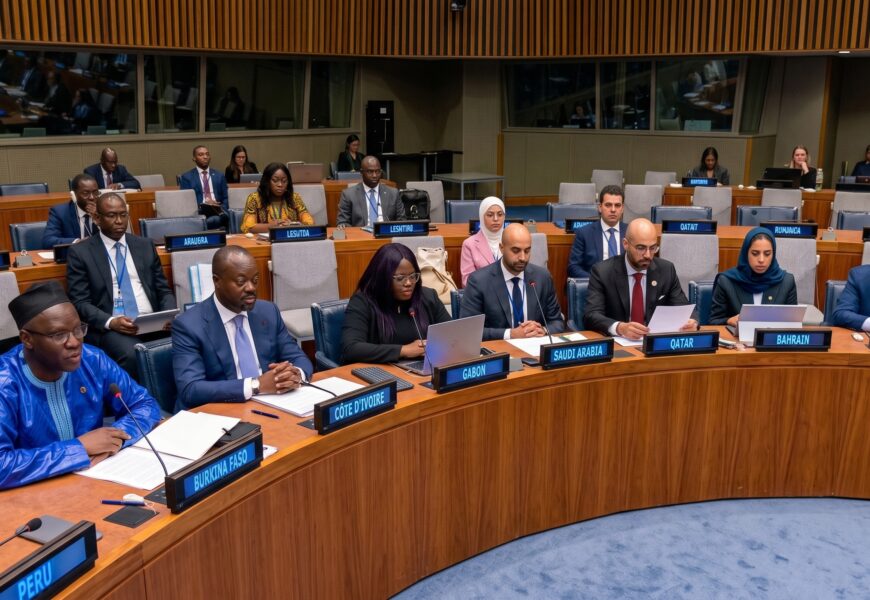
International support for Morocco’s proposed autonomy plan for the Moroccan Sahara continues to gain momentum in New York. Before the Fourth Committee of the United Nations General Assembly, countries from different continents have renewed their backing for the Moroccan initiative, describing it as a credible, realistic, and sustainable basis for resolving the dispute.
Gulf countries reaffirm their common position. Saudi Arabia, Qatar, Kuwait, and Bahrain have reiterated their support for the autonomy initiative under Moroccan sovereignty. Riyadh notably emphasized that the plan complies with international law and UN resolutions, while calling on the parties concerned to demonstrate “wisdom, realism, and a spirit of consensus.”
Doha described the Moroccan initiative as “constructive,” considering it an “objective basis” for achieving a realistic and lasting solution that respects the Kingdom’s sovereignty and territorial integrity. Kuwait and Bahrain also welcomed UN Security Council Resolution 2797, calling for continued diplomatic efforts toward a definitive settlement.
The overwhelming majority of African countries reaffirm their commitment to standing alongside Morocco. In this context, Gabon, Côte d’Ivoire, and Burkina Faso have renewed their support for the autonomy plan. Ivorian Ambassador Tiémoko Moriko particularly highlighted the growing international momentum behind the initiative, which, he recalled, now enjoys the support of approximately 130 countries, including three permanent members of the UN Security Council.
Gabon welcomed Resolution 2797, stating that it “injects new momentum” into efforts to resolve the dispute, while Burkina Faso called for its effective implementation.
The three African countries also highlighted the significant economic and social progress achieved in Morocco’s Southern Provinces, particularly in infrastructure, healthcare, education, and regional development. They praised Morocco’s investments aimed at transforming the region into an economic and logistics hub.
In Latin America, Peru has joined this same diplomatic momentum. Its representative at the United Nations reaffirmed Lima’s support for Morocco’s sovereignty and territorial integrity, calling for a solution based on the Moroccan autonomy plan, in accordance with Resolution 2797.
Despite their geographical diversity, these recent diplomatic statements converge on three essential points: the central role of the Moroccan autonomy initiative, the importance of Resolution 2797, and the need for a negotiated, realistic, and lasting political solution.
This diplomatic convergence, expressed within the United Nations itself, reflects the expanding international support for Morocco’s approach to achieving a definitive and, above all, swift resolution of the Moroccan Sahara issue.