

In his latest “Sunday Confidences” (Boua7 Al A7ad), Abou Wael Al-Rifi looks back in particular at the events in Ceuta, the desperate manoeuvres of certain Spanish circles, Abdelilah Benkirane’s outbursts, and the latest revelations concerning the “Canadian mafioso.”
Abou Wael Al-Rifi devotes the largest part of his “Sunday Confidences” to the still-resonating repercussions of the events in Ceuta at the end of July. According to him, Spain’s political class is still struggling to come to terms with what he describes as a “preventive, operational and on-the-ground failure.” He argues that several Spanish political currents sought either to exploit the crisis for political gain or to shift responsibility onto Morocco, while Rabat maintains that its responsibility is limited to securing its own borders.
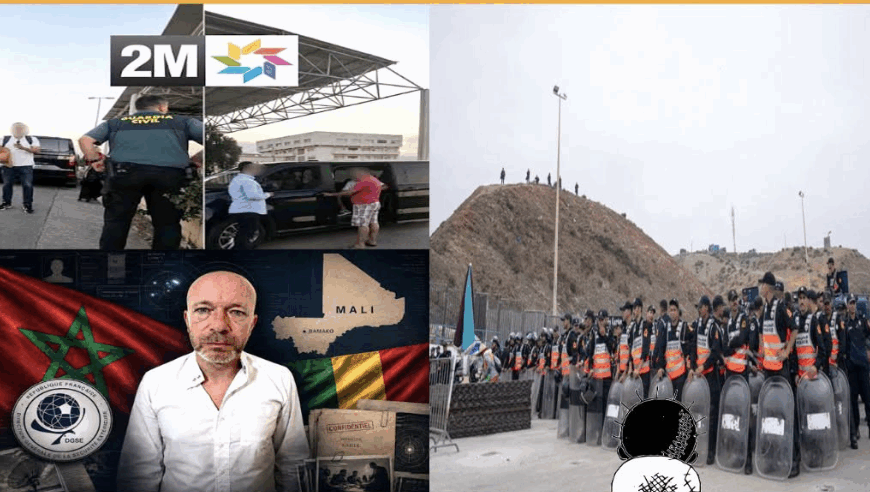
The author also dwells on the working conditions faced by Moroccan media in Ceuta, notably mentioning the decision to prevent a 2M crew and other Moroccan journalists from covering the events, as well as the temporary seizure of equipment. He contrasts this with the criticism voiced in Spain after Spanish journalists were asked to leave a security operations zone in Fnideq. For Abou Wael, this difference in treatment reveals a double standard in the way press freedom is approached.
Another point he highlights is the human and material cost borne by Moroccan forces during the interventions. The columnist cites 107 members of the security forces injured and 26 vehicles damaged or set ablaze during the first days of the operations. At the same time, he stresses the efforts deployed on August 15 to prevent further attempts at mass crossings into Ceuta.
The issue of minors is another source of friction. Abou Wael says Spain is seeking to speed up their return, while Morocco insists on prior individual identification and could only take back Moroccan nationals whose identities have been formally established, in the presence of their families and in accordance with the required procedures.
In connection with this issue, the analysis launches a blistering attack on Abdelilah Benkirane. Abou Wael strongly criticises the way the former head of government publicly disclosed that he had sent a letter to His Majesty the King regarding the events in Ceuta and then spoke of awaiting a response. According to the author, this goes beyond the legitimate right to address the Sovereign once the content of the communication is made public and the King appears to be placed under an implicit deadline to respond. He adds that Benkirane, driven by narrow political calculations, is trying to interfere in a matter that the competent institutions have not yet finished handling.
The author then revisits certain episodes from the former PJD secretary-general’s less-than-glorious past. Abou Wael Al-Rifi portrays Benkirane today as an outdated political figure who has slipped into a disconnected form of “daily routine” content in an attempt to conceal his isolation. It is, in effect, an invitation for him to formalise his retirement. The columnist argues that the “Lamp Party” will not be able to rekindle its flame without a genuine assessment of its electoral collapse and political choices.
Abou Wael then broadens his focus to anti-Moroccan voices seeking to exploit tensions with Spain and the European Union. He considers any attempt to exert pressure through energy to be illusory, arguing that Morocco has diversified its partnerships sufficiently to have alternatives at its disposal.
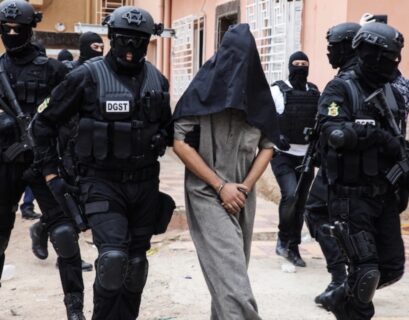
By contrast, he highlights Morocco’s security capabilities, citing the mediation that led to the release in Mali of French DGSE agent Yann Vézilier. According to him, the episode illustrates the depth of Morocco’s networks in the Sahel and a doctrine based on security cooperation without the slightest political exploitation of such successes.
The closing lines return to the latest leaks attributed to “Atlas Hackers.” Abou Wael relays serious allegations against the man he calls the “madman of Canada,” particularly concerning his alleged links to mafia-style drug trafficking networks. These allegations have recently been bolstered by recordings, without those elements having so far been enough to prompt a response from the Canadian authorities, despite calls to that effect by L’Observateur du Maroc et d’Afrique : Canada Must Clarify