


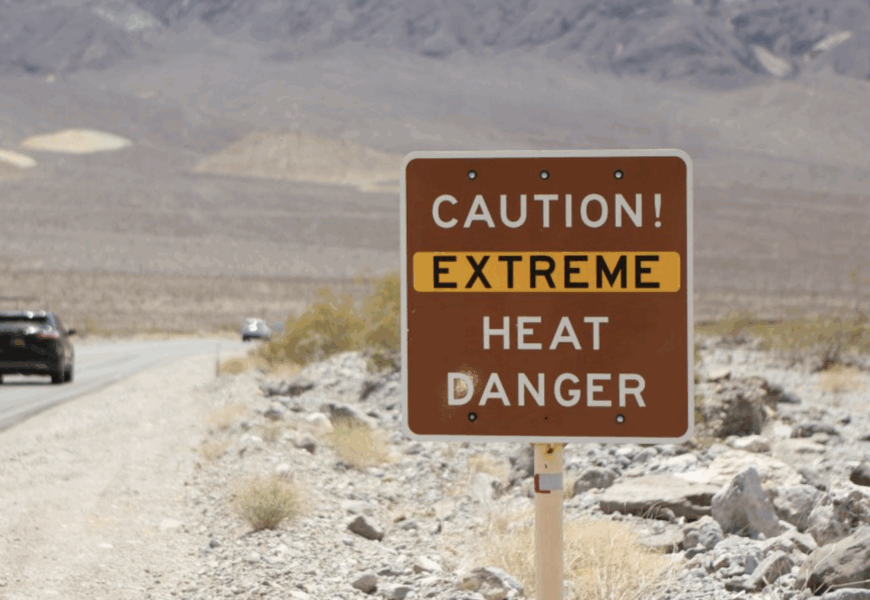
Extreme heat is becoming an urgent priority in the United States and beyond. The threat posed by extreme heat has become a matter of national security, impacting U.S. military readiness, while threatening economic growth, productivity, and global competitiveness. The negative health, social, and economic effects of extreme heat have become a common, lived experience among broad sectors of the American public, cutting across income, racial, ideological, and geographic lines. As extreme heat events have become more politically salient, they have raised popular expectations and prompted state, municipal, and local leaders, working in partnership with universities, community groups, businesses, and philanthropies, to seek pragmatic solutions that draw support across the partisan divide. In the fall of 2024, the CSIS Bipartisan Alliance for Global Health Security launched a working group to develop policy recommendations for addressing climate-related health challenges that have implications for national security. The working group argues that three actions lay the foundation of a strategy to better protect Americans, strengthen preparedness, and protect U.S. national interests: the launch of a high-level bipartisan panel, the establishment of a data consortium, and the strengthening of essential core federal functions. In combination, these measures will make the United States stronger, more secure, and more prosperous.
Brief by J. Stephen Morrison, Katherine E. Bliss, and Christina E. Zielke
Extreme heat is swiftly becoming an urgent priority in America and beyond.1 The threat posed by extreme heat has become a matter of national security, impacting U.S. military readiness, while threatening economic growth and productivity, including U.S. global competitiveness.
Americans see and feel the threat. Heat waves, wildfires sparked by drought and increased temperatures, and storms and flooding driven by warming oceans are ever-more prominent aspects of the lived experience of the American people, and indeed, a large portion of the world’s population.2 People across the country are familiar with dangerous temperature spikes that lead to heat-based chronic illness, negative pregnancy outcomes, and excess deaths; increase emergency room visits; drive activity indoors; depress productivity; and strain infrastructure. At the same time, the greater number and expanding geographic range and duration of heat events indirectly affect human health through increases in illnesses caused by exposures to wildfire smoke, environmental pathogens and contaminants, harmful algal blooms, and dust storms.
The impact of extreme heat on the nation’s economic and national security is real and growing. Recognizing the growing risk, many areas of the U.S. government and civil society have implemented mitigation measures over the past 30 years. Since the mid-1980s, the Uniformed Services University has conducted research and regularly published updated guidance to protect military members from the risks of operating in hot environments.3 From 2018 to 2022, the Department of Defense (DOD) documented over 11,000 cases of heat-related illness among military members.4 In 2014 and in 2021, the DOD published roadmaps to provide for the continuity of DOD operations in support of national security priorities in the face of increasingly frequent extreme heat and related events.5 In 2024, the DOD published a heat resilience plan to address the impact of extreme heat on logistical support, deployed operations, and training.6 Both civilian and military aviation authorities globally have recognized the risk to safe aircraft operation in high heat and mandated changes in operations. The Department of the Interior published an Aviation Accident Prevention Bulletin on heat-related mishaps in 2009.7 A recent study projected up to a 49 percent increase in airline passenger recovery costs by 2050 due to infrastructure and operational changes driven by extreme heat.8
In 2025, the new administration began to realign the federal government’s climate, energy, and health priorities, including proposals to end support for extreme heat monitoring and mitigation measures.9 These actions remain subjects of continued deliberation among Americans, including in Congress. In the meantime, Americans increasingly expect to see action. In response, states and cities, many of which have already taken numerous steps to combat extreme heat, have jumped to the fore, leading determined new efforts. The result: a de facto coalition, including members of Congress, states, cities, universities, medical providers, civil society groups, corporations, and philanthropies, has begun to form, motivated by a commitment to bring greater attention and coherence to efforts to meet the health challenges associated with extreme heat.
In this brief—the first report of the working group on climate and health of the CSIS Bipartisan Alliance for Global Health Security (CSIS Alliance)—the working group recommends urgent action on extreme heat to make the United States stronger, safer, and more prosperous, as rising temperatures lead to increased heat waves, along with flooding, wildfires, and dangerous storms.
Read The Full Report
https://www.csis.org/analysis/three-steps-protect-united-states-against-extreme-heat