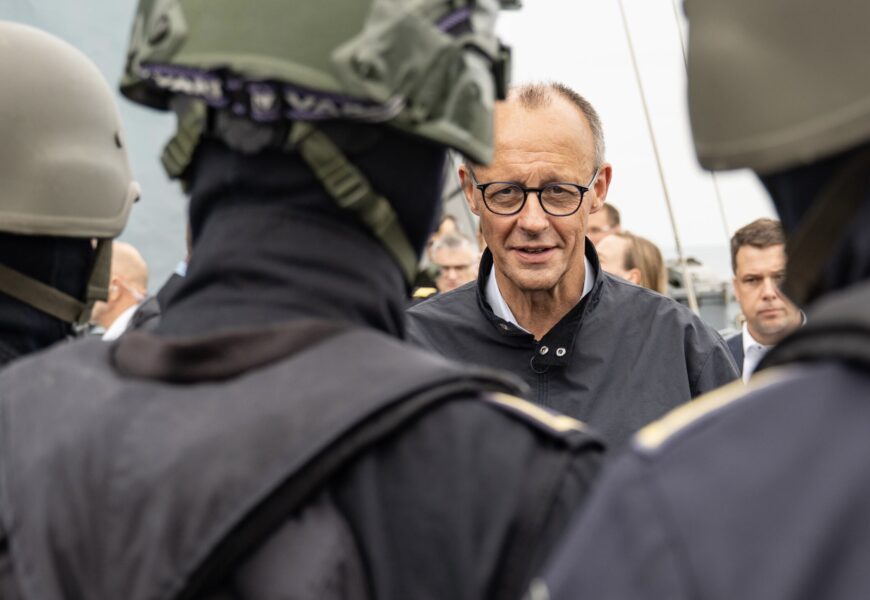


German Chancellor Friedrich Merz has pledged to revitalize Germany’s military. Among other efforts, in June, Berlin announced plans to spend nearly €650 billion over the next five years—more than double its current military spending—to hit NATO’s spending target of 3.5 percent of gross domestic product (GDP) on core defense requirements and transform the Bundeswehr into Europe’s strongest military.
This investment is welcome news. But this shift in German defense spending is a reminder of Germany’s deeply problematic and decades-long underinvestment in its defense.
For years, Germany’s defense capabilities were flashing red. It was only in 2024 that Germany hit NATO’s past spending target of 2 percent of GDP, which the Alliance agreed to in 2014. This was the first time Germany had spent 2 percent of its GDP on defense since 1991. As a result of paltry spending, German land forces stand at around 50 percent readiness. Compounding the problem are a maintenance backlog worth billions of euros and a shortfall of about twenty thousand troops—a gap likely to grow given new NATO force commitments. As it stands, Berlin lacks the personnel or the equipment to stand up the ten brigades by 2030 that it promised to NATO’s planners in 2021. Its celebrated Lithuania brigade is struggling to deploy to a friendly next-door neighbor. Earlier this year, Johann Wadephul, who is now Germany’s foreign minister, lamented that the military “has nothing at all” when it comes to drones.
All of this is happening at a time when Germany’s strategic calculus must confront both a revisionist Russia waging a genocidal war against its neighbor—and against Europe’s security order—and an increasingly disinterested United States, on which Germany based its security for the past seven decades. In short, Germany’s defense readiness needs help, and fast.
So, what should be the priority? This was a question we posed to the Atlantic Council’s Germany and defense experts, who provide ample ideas on how Germany should allocate its newfound piles of euros.
But beyond projects such as revitalizing its land, air, and naval forces, developing drone capabilities, and aiding Ukraine, what Germany needs is more than just money. If Berlin is to reassure itself, its European partners, and the United States of its newfound seriousness on defense, Germany’s spending must be as strategic as it is sizable. By choosing the right priorities, Merz could mark a real turning point, ingraining a new psyche in Germany’s strategic outlook. Below, Atlantic Council experts lay out the areas where Merz and his team should start.
–Jörn Fleck is the senior director of the Atlantic Council’s Europe Center.
—James Batchik is an associate director with the Atlantic Council’s Europe Center.
–Jack Muldoon, a young global professional with the Europe Center, supported the research for this project.
Germany wants to double its defense spending. Where should the money go?