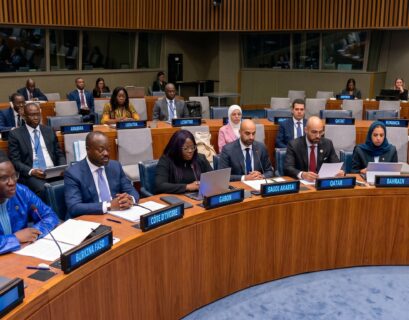
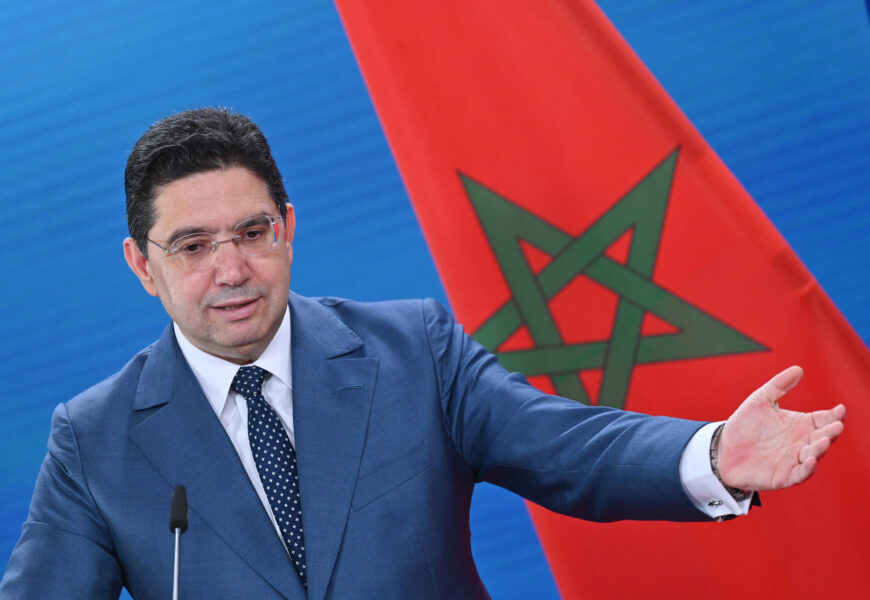
“The Kingdom of Morocco and the European Union have just successfully concluded, in a spirit of partnership, the negotiations relating to the amendment of the agricultural agreement binding the two parties,” declared, on Thursday, the Minister of Foreign Affairs, African Cooperation and Moroccans Living Abroad, Nasser Bourita.
In a statement today in Rabat, the Minister specified that “the signing will take place shortly in Brussels,” and that pending the completion of internal procedures, “the agreement will be provisionally applied as soon as it is signed.” This agreement, he emphasized, “provides the necessary clarifications, in full respect of the Kingdom’s national fundamentals.” It is in line with, and “follows the philosophy of the exchange of letters signed between the two parties in 2018,” to which “the general framework of the new text remains faithful,” he added.
The Minister further underlined that “the agreement confirms the application to the Southern Provinces of the preferential tariffs granted by the EU under the Association Agreement with Morocco,” explaining that “as a general rule, the conditions of access to the European market for products from the North will also apply to products from the Moroccan Sahara.”
The text, he clarified, also introduces technical adjustments concerning consumer information on the origin of products. An indication mentioning the regions of production in the South of the Kingdom – “Laayoune-Sakia El Hamra” and “Dakhla-Oued Eddahab” – will appear on agricultural products, he noted.
Moreover, the text recalls the position expressed by the European Union in 2019 on the Moroccan Sahara, where the EU took positive note of Morocco’s serious and credible efforts. It also refers to subsequent national positions adopted by numerous EU Member States, expressing their support for Morocco’s Autonomy Initiative, within the framework of the dynamic launched by His Majesty King Mohammed VI, may God assist Him, he stressed.
Bourita pointed out that “of course, this is not a political agreement; but rather a sectoral, commercial, and operational one. Yet, it nonetheless sends strong and clear signals.” In this respect, the Minister highlighted the enlightened vision of His Majesty King Mohammed VI, thanks to which “the Moroccan Sahara has become a zone of development, connectivity and prosperity, confirmed as a hub of stability and regional growth.” This dynamic, he added, explains “the interest of major global and regional powers in economic activities in the Moroccan Sahara, and their willingness to promote trade and investment in the region, in order to make the Sahara a bridge between Europe and Africa, between the Mediterranean and the Atlantic.” The Minister cited, as examples, “the strong statement made by the United States last week,” “the Morocco–France Economic Forum scheduled in Dakhla on October 9,” and “the initiative announced by the British agency UK Export Finance.”
Likewise, the Agreement with the EU “makes a qualitative contribution at the national level,” by participating in the agricultural GDP and in job creation and retention, particularly in the Moroccan Sahara, the Minister added.
“Naturally, this Agreement consolidates the long-standing and solid strategic partnership between Morocco and the EU,” Bourita reaffirmed, stressing that Morocco is a reliable and credible partner, with which the EU carries out the majority of its trade in Africa and the Arab world, amounting to over €60 billion annually, including industrial goods, equipment, and agricultural products.
Furthermore, while stressing that “His Majesty the King has always wished for the Morocco–EU Partnership to be deployed through joint and concrete actions,” Bourita pointed out that “the trade and agricultural sectors are important, of course, given their place in the Kingdom’s economy, but our Partnership [with the European Union] also extends to a wide range of areas: political, economic, social, environmental, as well as the fields of migration and mobility, security, digital, and culture.”
Finally, at a time when the regional context is complex and crises are becoming structural, this incremental step allows Morocco and the EU to approach their common future with confidence and to envision an ambitious and promising path forward, the Minister maintained.
“We are now in a position to fully deploy our existing potential, whether it be to prepare joint milestones, to energize our political frameworks such as the Association Council, or to lay the foundations of an even deeper strategic partnership that will guide our relations in the years to come,” Bourita concluded.