
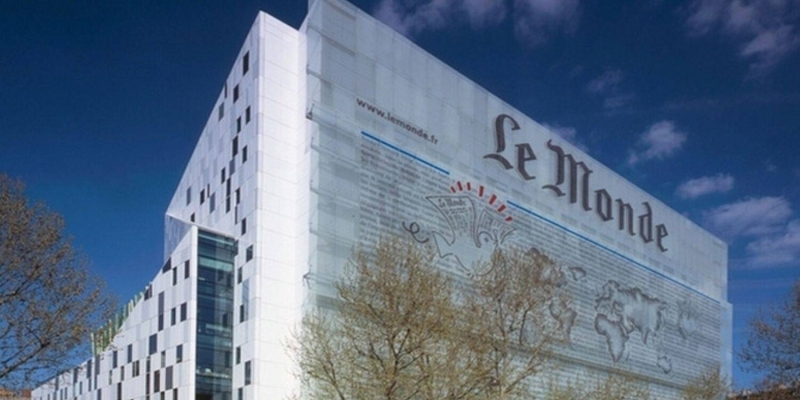
It is not freedom of expression that I contest, nor Le Monde’s right to scrutinize Morocco. What I question is the quality of a newspaper once exemplary and which, for years now, seems to have abandoned the intellectual rigor that built its prestige. The problem is not that a critical article is published. The problem is that it is published with such analytical lightness and such indulgence in cliché that I wonder what has become of this newspaper of reference.
Bernard-Henri Lévy pointed this out decades ago: “Le Monde had broken with its heritage and had surrendered to emphatic writing, often conspiratorial, turning every detail into evidence in prepackaged intellectual trials.” BHL also denounced this temptation to elevate journalists into prosecutors and arbiters of truth, forgetting that the press is not made to “change France,” but to inform and enlighten.
These criticisms remain intact today. The August 24 article on an alleged “end-of-reign atmosphere” in Morocco illustrates this tendency: gratuitous dramatization, ready-made formulas, a narrative closer to serial fiction than to rigorous investigation.
What this type of approach conceals is the deep singularity of Morocco: a country at once young and ancient, modern yet deeply rooted, a living and complex nation that cannot be reduced to imported analytical frameworks. In November 2005, I published an op-ed in Le Monde where I wrote that Morocco is a “young country, thirteen centuries old.” Two decades later, this statement remains true. Morocco is the monarchy; and the monarchy is Morocco. Those who fail to understand this organic bond, this fusion between the King and his people, miss the very essence of our national identity.
I say it again forcefully: the monarchy is neither an archaism nor an institutional backdrop. It is the backbone of the nation, its continuity, its cement. It unites tradition and modernity, rootedness and future. Reducing this reality to an “end of reign” narrative is committing a double fault: a fault of understanding and a fault of respect.
Understanding, because nothing can be grasped about Morocco if one ignores the centrality of the monarchy. Respect, because one cannot seriously analyze a people while denying what underpins their collective imagination and cohesion.
I do not deny that Morocco has its challenges, contradictions, and weaknesses. But understanding them requires rigor, nuance, and depth. Qualities that were once those of Le Monde and that now seem to have dissipated into the ease of clichés. Journalistic criticism is legitimate, even necessary. But it must be grounded, substantiated, and proportionate. When it becomes approximation, it ceases to enlighten and is reduced to posture.
The real question, therefore, is not whether Le Monde has the right to write about Morocco. Of course it does. The question is whether it is still capable of doing so. Capable of speaking with the elevation and intelligence that were once its hallmark. Capable of offering the reader something other than a conventional and lazy narrative. Morocco has not changed in its essence: young and old at the same time, modern and rooted, it remains inseparable from its monarchy. Those who refuse to see it are merely projecting their fantasies.
That is the real tragedy, and perhaps the only “end of reign” I recognize: that of the great Le Monde of the past, the one that knew how to understand before it judged.