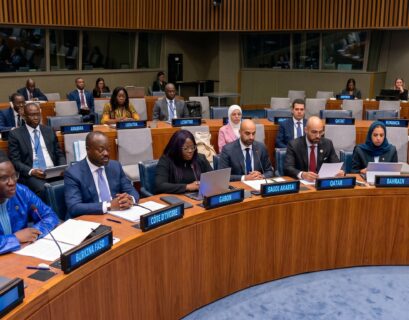

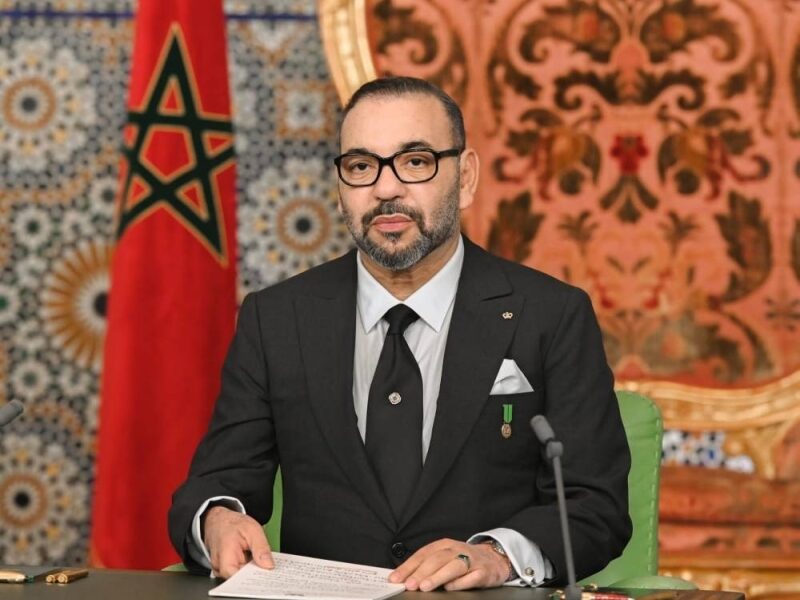
His Majesty King Mohammed VI addressed a Message to the participants of the 82nd session of the Institute of International Law, which opened its proceedings on Sunday at the headquarters of the Academy of the Kingdom of Morocco in Rabat. The full Royal Message was read out by the President of the Institute of International Law, Mohamed Bennouna.
“Praise be to God, prayers and blessings be upon the Prophet, His family, and His companions.
Ladies and Gentlemen, distinguished Members of the Institute of International Law,
Honored guests,
It is a great honor for the Kingdom of Morocco and for the city of Rabat to host the 82nd session of the Institute of International Law.
It has taken more than four decades—since the Cairo session in 1987—for Africa once again to have the privilege of hosting your deliberations. Welcome back, then, to the continent, and welcome to Morocco.
Since its creation in 1873, the Institute of International Law has not merely borne witness to the upheavals of the world. It has been a keen observer, a pertinent analyst, an initiator of norms, and a strong voice of universal legal conscience. You have pursued this mission with admirable perseverance. Your consecration by the Nobel Peace Prize in 1904 was the recognition of a masterful work in the service of international law.
This Rabat session is being held at a time when international law is being strongly shaken by the onslaught of violent contrary winds. The world is changing before our eyes, certainties are eroding, landmarks are blurring, alliances are being questioned, and international law—challenged in its very capacity to order international relations—is too often undermined.
In the face of these challenges, your Institute will, without doubt, consolidate its reputation and confirm its vocation.
The agenda of your work covers pressing issues, including pandemics—global crises that test not only the health of populations but also the fundamental principles on which the architecture of the world rests. Through the tensions between national sovereignty and international cooperation, between security imperatives and solidarity requirements, such a systemic crisis does not merely disrupt the established order; it exposes its flaws and accelerates its transformations. It falls to you today to grasp these transformations, not only to understand the recent past but to outline the contours of an international law more resilient and better equipped to face the challenges of tomorrow.
For its part, the Kingdom of Morocco has always anchored its foreign action in a legalist, structured approach, based on respect for international law and the principles of the United Nations Charter. There is no viable order without rules, and it is in this conviction that Moroccan diplomacy is rooted. But we also know that no great achievement can be realized in isolation. International dynamics are not mere balancing acts between States; they are grounded in values, in consensual principles, and in institutions capable of structuring cooperation and ensuring the sustainability of those principles.
Finally, we salute in your Institute this fervent defender of the peaceful settlement of disputes, steadfast in its commitment to the principles of the United Nations Charter. Over time, the Institute has shown itself able to listen to the world, to open up to diversity, and to integrate the voices of all cultures and sensitivities. That this session is being held in Morocco, under the presidency of a Moroccan fervent defender of international law, is, in our eyes, the best proof of this spirit.
May Morocco be a source of inspiration for you, may Rabat serve as a crucible of exchange and emulation, and may this 82nd congress restore international law to its rightful place: not as the seat of a disenchanted utopia, but as a beacon in the fog.
Wassalamu alaikum wa rahmatullah wa barakatuh.”