Morocco is not perfect. It is not beyond criticism. But should it be judged solely through its imperfections, ignoring its progress, its strategic decisions, and the balances it maintains in a world in crisis?
No, Morocco is not a stagnant country. It is not isolated or disconnected. It is a country on the move, engaged on multiple fronts — economic, diplomatic, security — with a consistency that commands respect.
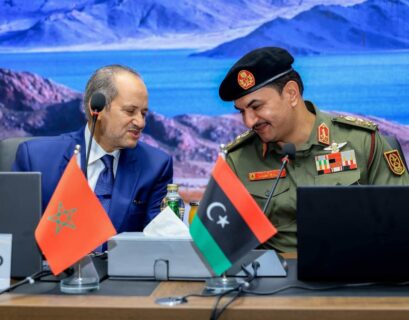
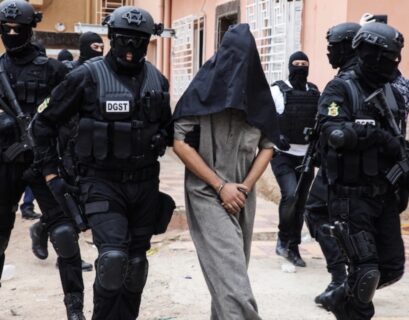
It takes only a minimum of good faith to recognize that the Kingdom is moving forward. Economically, it is establishing itself as a structuring actor in its regional and continental space. Diplomatically, it is listened to, consulted, often imitated. In security matters, it demonstrates remarkable stability, where so many others sink into chaos.
Is that little? No. It is considerable.
And yet, there is growing hostility, often ill-intentioned. It repeatedly targets key figures of the state apparatus, such as Abdellatif Hammouchi or Yassine Mansouri — men who never sought public recognition, but who have always worked discreetly to preserve the country’s fundamental balances.
Why this desire to harm? Why this obsession with destroying what stands, what protects, what works?
This is not a battle of ideas. It is a strategy of destabilization.
Fortunately, this agitation remains confined to a marginal minority, often disconnected from the realities of the country and blinded by the logic of systematic opposition.
In a shaken region, Morocco has chosen progressive reform. It advances in democratic construction without upheaval and without renunciations. It anchors its evolution in an assumed historical continuity, carried by a monarchy that embodies both unity and openness. This trajectory is not imposed by force: it is the fruit of national consensus.
What many call “the Moroccan exception” is not a communication slogan. It is a political reality. Where other countries have torn themselves apart, Morocco has chosen stability without falling into immobility. It has advanced without denying its foundations. It is this hybrid, flexible, and robust model that disturbs. Because it works. Because it inspires.
Yes, I am proud to be Moroccan. Not with a naïve or chauvinistic pride, but with a lucid pride. Proud to belong to a nation that has known how to welcome and integrate: Amazighs, Arabs, Jews, Africans, Andalusians, Mediterraneans. Proud of a society that builds itself without brutal ruptures, without bloodshed, but with coherence and resilience.
Proud also of a people who, for the most part, aspire to stability, to progress, to justice — and not to anarchy or resentment.
We live in a time of great transformations. The world is changing. The region is being redefined. Morocco, for its part, stands firm and looks to the future with confidence. But it cannot do so alone. It needs all its forces, all its children, all its intelligence.
So let us end these sterile battles, this silent war against ourselves.
Let us criticize, yes. But with honesty.
Let us oppose, if necessary. But in order to build.
Let us love this country not because it is perfect, but because it is ours. Because it is capable of weathering storms without losing its course.
Morocco is a lesson. A lesson of history, of commitment, of loyalty, and of vision.
It is up to us to honor it.
It is up to us to be worthy of it.